
Dunes PGA equipment guide
Which Callaway Quantum fits your swing?
Five heads cover neutral performance, draw help, a lighter build and two lower-spin player shapes. Here is the clear starting point for comparing them.
Start with what you need
Five heads. Five fitting routes.
A useful first comparison, not a substitute for testing. Strike, delivery, loft and shaft can all change which head performs best.
At a glance
See the differences clearly.
Supplier information translated into a practical starting point for a fitting.
| Model | Launch | Spin | Forgiveness | Flight tendency | Best starting point for |
|---|---|---|---|---|---|
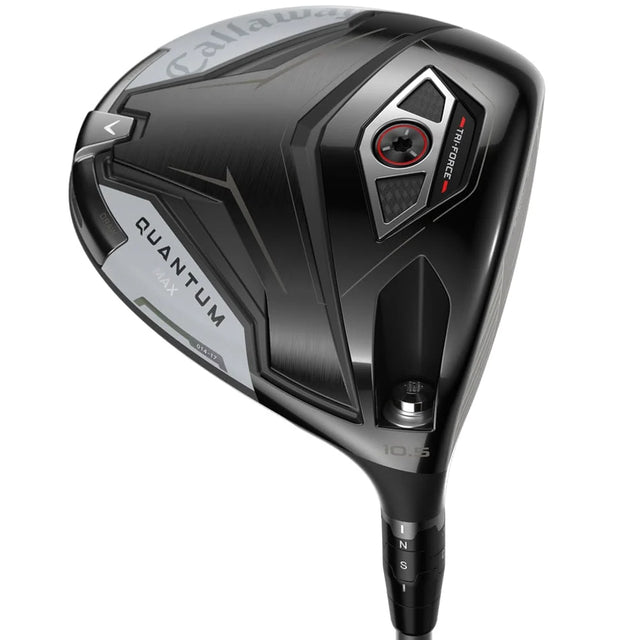
| Quantum Max | Mid to high | Mid to low | High | Neutral or draw | you want a confidence-inspiring neutral head with a blend of speed, forgiveness and adjustability |
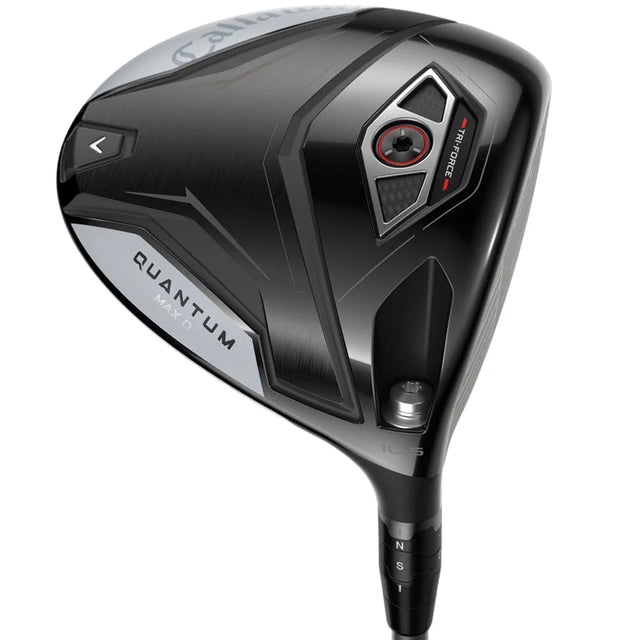
| Quantum Max D | High | Mid | Highest | Draw biased | your usual pattern is a damaging miss to the right and you benefit from a more draw-biased setup |
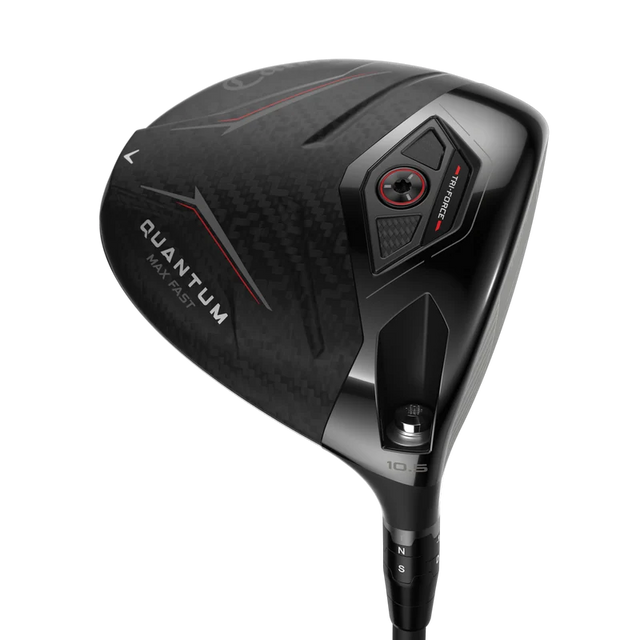
| Quantum Max Fast | High | Mid | High | Neutral | a lighter club helps you generate speed without losing centred contact or control |
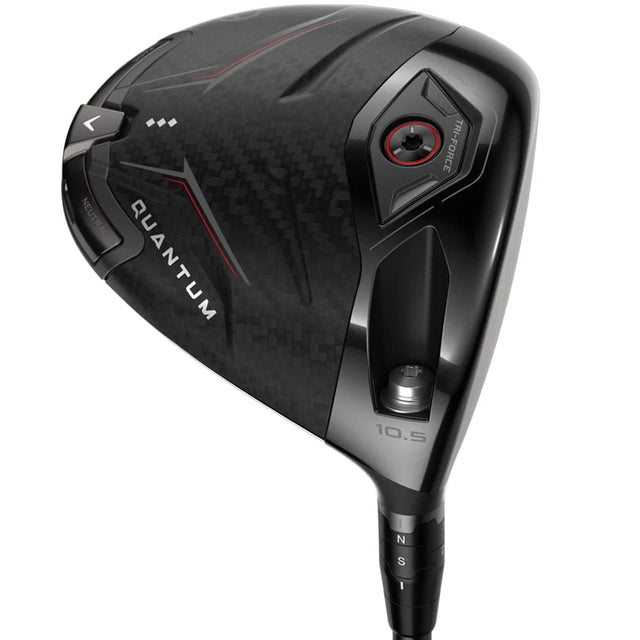
| Quantum Triple Diamond | Low to mid | Low | Moderate | Neutral to fade | you prefer a compact 450cc shape and your delivery genuinely benefits from lower spin |
| Quantum Triple Diamond Max | Mid | Low | Mid to high | Neutral | you want speed and lower spin but prefer a larger, more stable head than the compact Triple Diamond |
Based on the manufacturer's current published range. View supplier information.
Plain-English guidance
Which Quantum should you try?
The correct head is the one that produces the most useful combination of speed, launch, spin and dispersion for your swing.
 Balanced starting point
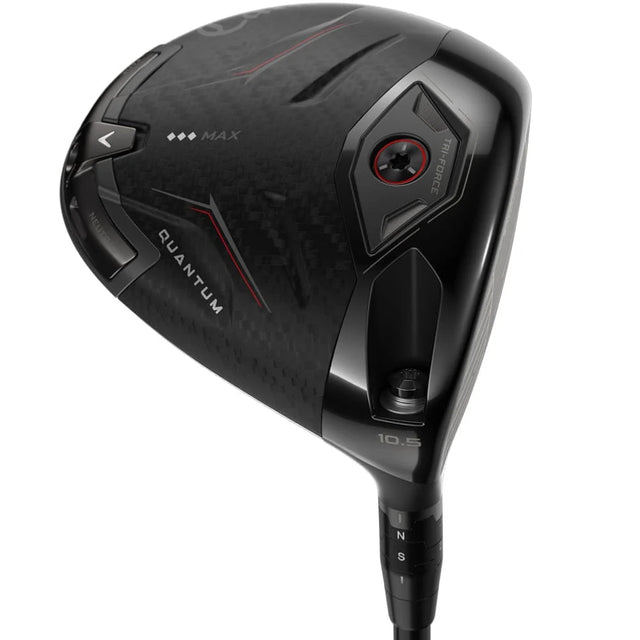
Quantum Max
The broad all-rounder
Consider this if: you want a confidence-inspiring neutral head with a blend of speed, forgiveness and adjustability
Designed for fast ball speed, mid to low spin and reliable consistency, with neutral and draw settings available through its weighting.
Worth knowing: A neutral starting point still needs the correct loft, shaft and weight setting.
 Draw help
Quantum Max D
High launch with draw bias
Consider this if: your usual pattern is a damaging miss to the right and you benefit from a more draw-biased setup
A forgiving, high-launching head with a slight draw bias. It is designed to make face closure and launch easier for the right golfer.
Worth knowing: Draw bias cannot replace improvements to strike and delivery, and it can be too much for a golfer whose miss changes.
 Lightweight speed
Quantum Max Fast
Make speed easier to create
Consider this if: a lighter club helps you generate speed without losing centred contact or control
A lightweight build aimed at moderate swing speeds, combining a forgiving head with weight savings throughout the club.
Worth knowing: Lighter does not automatically mean faster. We verify speed, strike and dispersion.
 Compact control
Quantum Triple Diamond
Compact and workable
Consider this if: you prefer a compact 450cc shape and your delivery genuinely benefits from lower spin
A tour-inspired shape built for lower spin, workability and a stronger flight, with a deeper face and fade-ready weighting.
Worth knowing: Choosing the lowest-spin head can reduce carry and consistency when spin is already limited.
 Player speed with stability
Quantum Triple Diamond Max
Player performance in 460cc
Consider this if: you want speed and lower spin but prefer a larger, more stable head than the compact Triple Diamond
A full 460cc better-player head combining lower-spin performance with more size and stability.
Worth knowing: The larger shape adds stability, but it remains a lower-spin fitting option rather than a universal upgrade.
The Dunes view
Use the guide, then prove it in a fitting.
Quantum Max is the sensible baseline for many golfers. We only move towards draw bias, less overall weight or a Triple Diamond head when the delivery and ball flight show a clear reason.
In stock now
Quantum drivers ready at Dunes.
These drivers are physically in stock at Dunes and available for immediate collection or despatch. We can also fit and supply the wider Quantum range.
